
The Samuel Freeman House, perched in the Hollywood Hills of Los Angeles, is a unique example of Frank Lloyd Wright’s experimentation with textile block houses. Built in 1923, the residence utilizes over 12,000 cast concrete blocks, textured with pre-Columbian designs, to create a unified look both inside and out. Wright’s design cleverly utilizes the slope of the land, making the house appear as a modest single-story structure from the street while extending two additional levels down the hill to maximize the footprint and the views.
This page contains affiliate links. We may earn a small commission from qualifying purchases, which helps support the site at no extra cost to you. Read our full disclosure.
Preservation and Management
The Freemans, Samuel and Harriet, were a fitting pair for this innovative dwelling. They were prominent members of the Los Angeles avant-garde scene, and their home became a legendary gathering place for artists and intellectuals for over 60 years. The Freemans lived in the house until 1986, when they donated the property to the University of Southern California (USC).
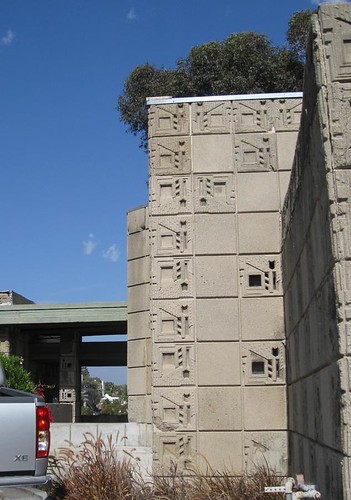
The house has faced significant structural challenges over the years, particularly due to seismic activity and the natural degradation of the textile blocks. USC has overseen various stages of stabilization and restoration to protect the home’s structural integrity. Today, the Samuel Freeman House stands as an enduring example of both Wright’s architectural vision and the Freemans’ vibrant cultural influence in Los Angeles. It is recognized as a City of Los Angeles Historic-Cultural Monument and is listed on the National Register of Historic Places.
Architectural Style and Innovation
What sets the Freeman House apart from its “textile block” siblings is Wright’s use of glass-to-glass corner windows, which “knit” the concrete blocks together while dissolving the corners of the rooms to reveal spectacular views of the LA basin. The 12,000 blocks were cast using local sand and gravel, intended to harmonize with the colors of the hillside.
Inside, the home originally featured custom furniture designed by Wright, as well as later additions by Rudolph Schindler, who was a close friend of the Freemans and even lived in the house for a time. This layer of architectural history makes the home a rare “palimpsest” of Los Angeles modernism.
Plan Your Visit
📍Location
The Samuel Freeman House in Los Angeles, California. The house is situated on a very narrow, steep residential street in the Hollywood Hills.
🛑Curb-Side Viewing Only
Please be aware that this Frank Lloyd Wright-designed home is a privately owned residence and is not open to the public for tours. We kindly ask that you respect the neighbors’ privacy and refrain from trespassing on the property. Due to the extremely narrow nature of Glencoe Way, we recommend a brief, respectful viewing only or view our YouTube playlist which shows some interior rooms.
🧳Make it a Trip
The Freeman House is located just a short drive from the Hollyhock House and the Ennis House. Together, these three sites offer a complete picture of Wright’s early-1920s fascination with concrete as a high-art medium. Afterward, you can head down the hill to the Hollywood Bowl, which is within walking distance of the Glencoe Way neighborhood.
🏨Hotels in Hollywood
-
Best Western Plus Sunset Plaza Hotel – A classic choice on the Sunset Strip with easy access to the Hollywood Hills.
-
Kimpton Everly Hotel – A stylish, boutique-style hotel located at the base of the Hollywood Hills. It offers a sophisticated atmosphere and a rooftop pool with views that rival the Freeman House itself.
-
Holiday Inn Express & Suites Hollywood Walk of Fame – A convenient and modern hotel located near the base of the hills.
Additional Resources & Inspired Products
Find unique products, books, and gifts inspired by Frank Lloyd Wright’s legacy at our Amazon storefront: Wright at Home.
- Harriet and Samuel Freeman House, Los Angeles Conservancy
- Californian Textile Block: Frank Lloyd Wright at a Glance by Abby Moor (Author)