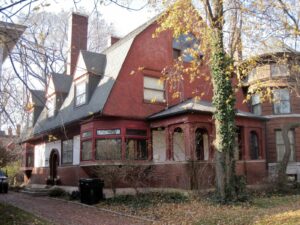
After our time exploring Wright’s work in California, we swapped the Pacific rain for a completely different climate in Lakeland, Florida. To minimize what could be a very long day of travel, we opted for a non-stop flight from San Francisco to Tampa. I had arranged this trip months in advance, so we thought we were prepared for everything—everything except the traffic! (In case you missed it, here’s a link the the first article: Discovering the Wright-Eichler Connection.)
This page contains affiliate links. We may earn a small commission from qualifying purchases, which helps support the site at no extra cost to you. Read our full disclosure.
Our flight was on time and we had rented a car with Budget, securing a great deal (up to 35% savings for AARP members) and even an upgraded vehicle. Tampa is just 35 miles from Lakeland, but heavy Florida traffic turned that short stretch into a nearly two-hour trek. By the time we arrived, it was already dark, so we checked into our room at the Holiday Inn Express on I-4 to get some rest and anticipate our tour of Florida Southern College in the morning.
📍 Know Before You Go
-
- Traffic Alert: Florida’s I-4 and I-75 corridors are notoriously unpredictable. Anticipate doubling the GPS estimates, especially when heading to a scheduled tour or the airport.
- Booking Tours: The Florida Southern College “In-Depth Tour” is highly popular and covers significant ground. Book well in advance to secure your spot.
- Attire: Wear comfortable walking shoes. If visiting in winter, bring light gloves for the chilly morning air and dress in light layers.
- Photography: Encouraged both inside and out! This is a rare opportunity for Frank Lloyd Wright sites, so keep your camera ready.
- Navigation: Use a reliable GPS for Lakeland; the one-way street system around the college campus can be confusing for first-time visitors.
- Notes: Throughout this article, I have included relevant links to the hotels, transport services, and restaurants we used during our trip to help you plan your own Florida architectural adventure.
Exploring Florida Southern College
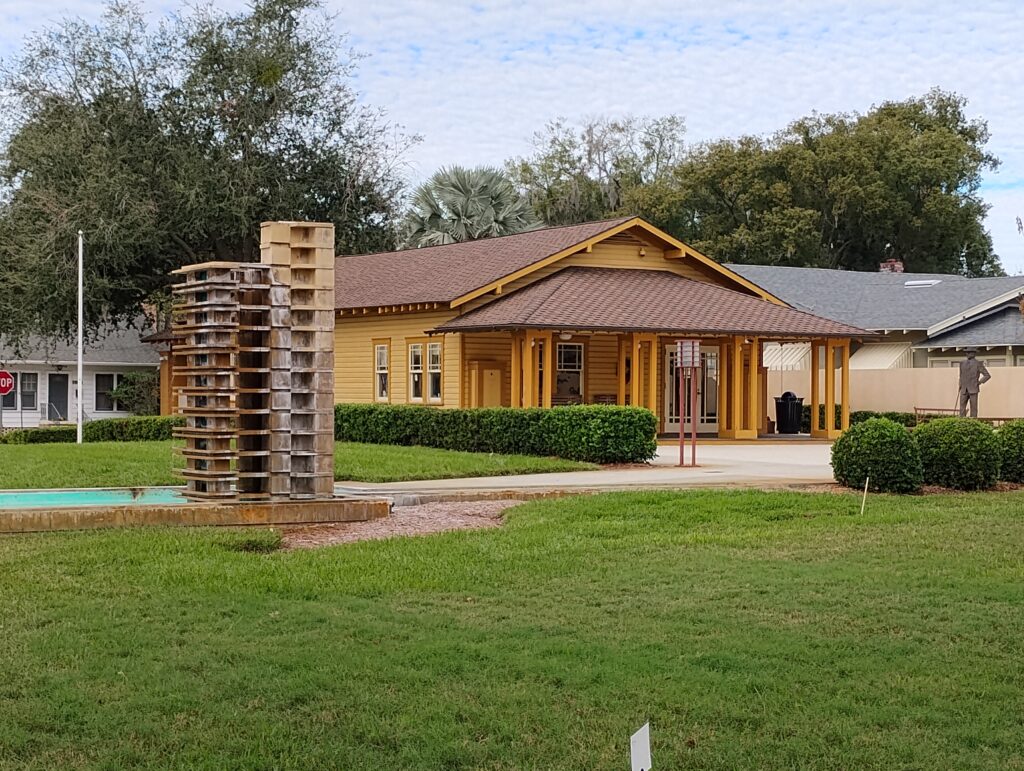
The morning drive to the campus was fairly quick, though the maze of one-way streets near the college makes a GPS almost essential. We parked in the lot directly across from the Sharp Family Tourism and Education Center and stepped into the gift shop. This is a place to spend some time; it’s packed with excellent reading material, souvenirs, and artifacts that set the stage for the architecture to come.
We picked up our tickets for the In-Depth Tour and were provided with portable headsets. With a tour group of about 14 people, the headsets were a fantastic addition—they allowed us to hear every detail from our guide even if we lingered behind to take a photo. Our guide set a welcoming tone right away, informing us that photography was encouraged throughout the tour, both inside and out.
Since it was late December, there was still a chill in the morning air, and I was glad I had a pair of knit gloves and comfortable walking shoes. The tour started right outside the Education Center near the statue of Frank Lloyd Wright and a beautiful water feature. After some preliminary background, our first stop was the Usonian Faculty House.
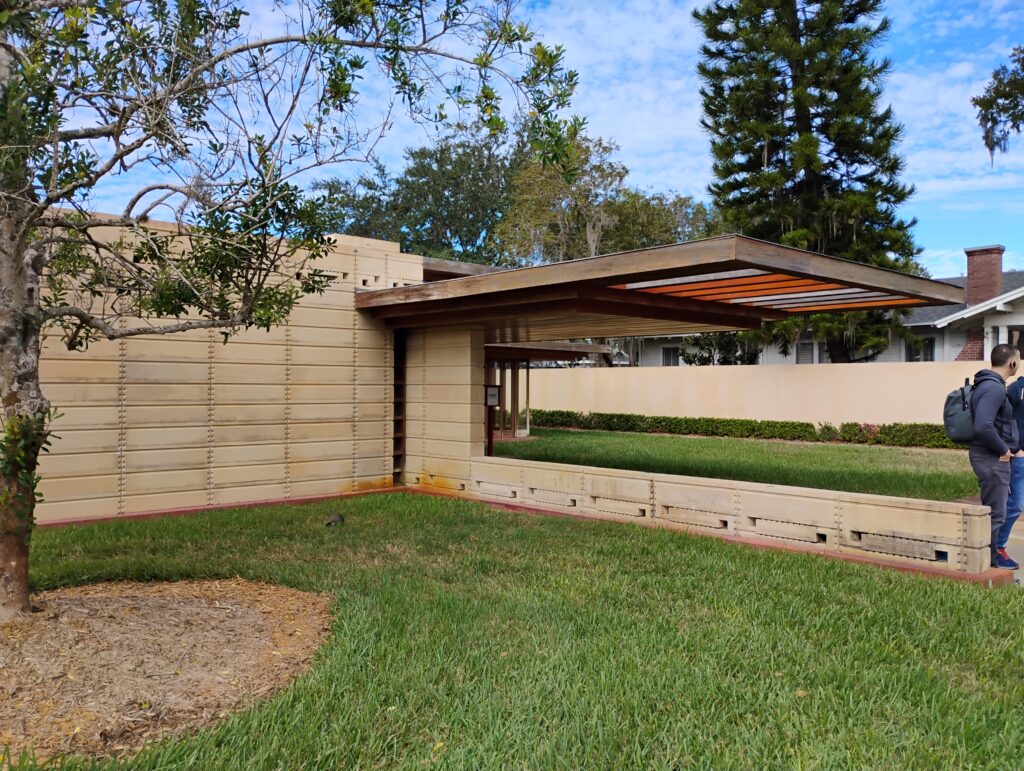
The house was recently built from Wright’s original plans for faculty housing. Because this was not a traditional “museum” house with roped-off sections, we were encouraged to sit down and be comfortable while our guide told us more about how the campus idea first started.
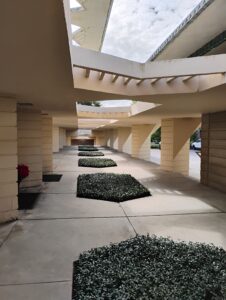
Shadow Play: Wright’s Geometric Esplanades
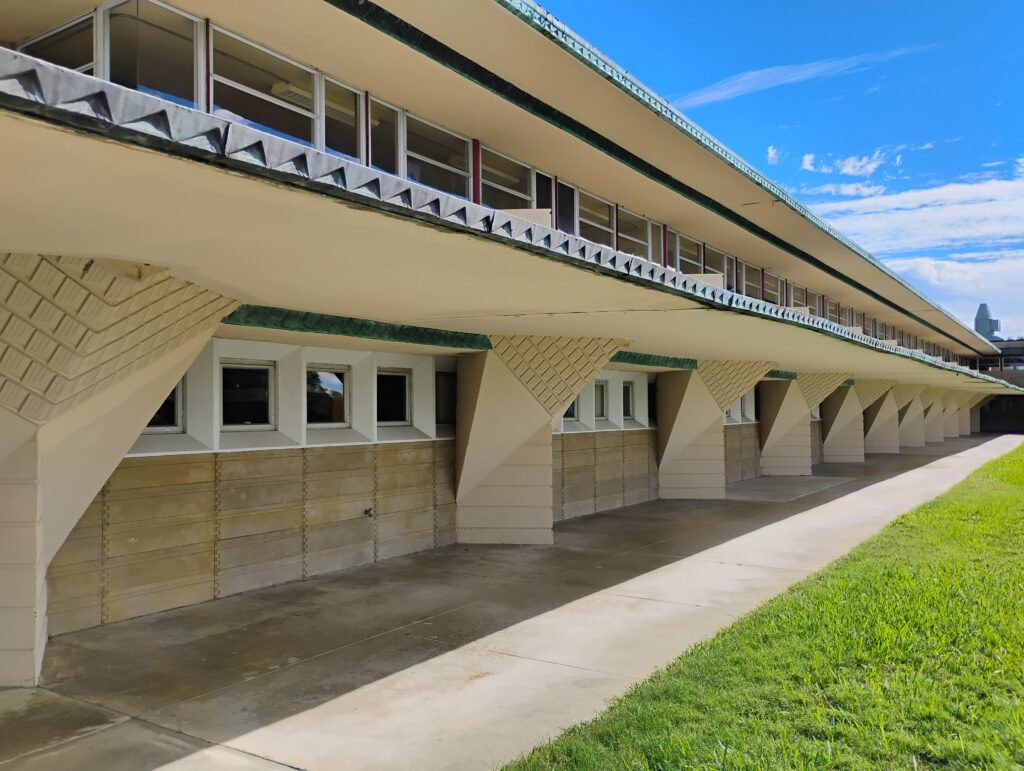
One of the most striking features of the campus is the extensive network of “esplanades”—covered walkways designed by Wright to shield students from the rain and intense Florida sun. Walking beneath them, I felt a wave of nostalgia for my college years at University of Illinois at Chicago in the late 1980s where I earned my degree in Biology. However, the contrast was sharp. At UIC, the walkways were stark and heavy as the UIC campus was more of a brutalist architecture designed by Walter Netsch.
Wright’s esplanades, while certainly substantial and permanent, feel entirely different. They are aesthetically brilliant, designed with geometric cutouts that allow the Florida sun to cast beautiful, shifting shadows and forms that change with the angle of the light throughout the day. They aren’t just paths; they are a sculptural experience that breathes with the environment.
Rather than recount the tour step-by-step, I will simply encourage you to travel to the area and take the tour yourself. I highly recommend the In-Depth Tour as it really lays the groundwork for what Wright and his client, Dr. Ludd Spivey, were trying to accomplish in Lakeland. We had a fantastic tour guide and group; people asked interesting questions, and our docent was extremely knowledgeable and friendly.
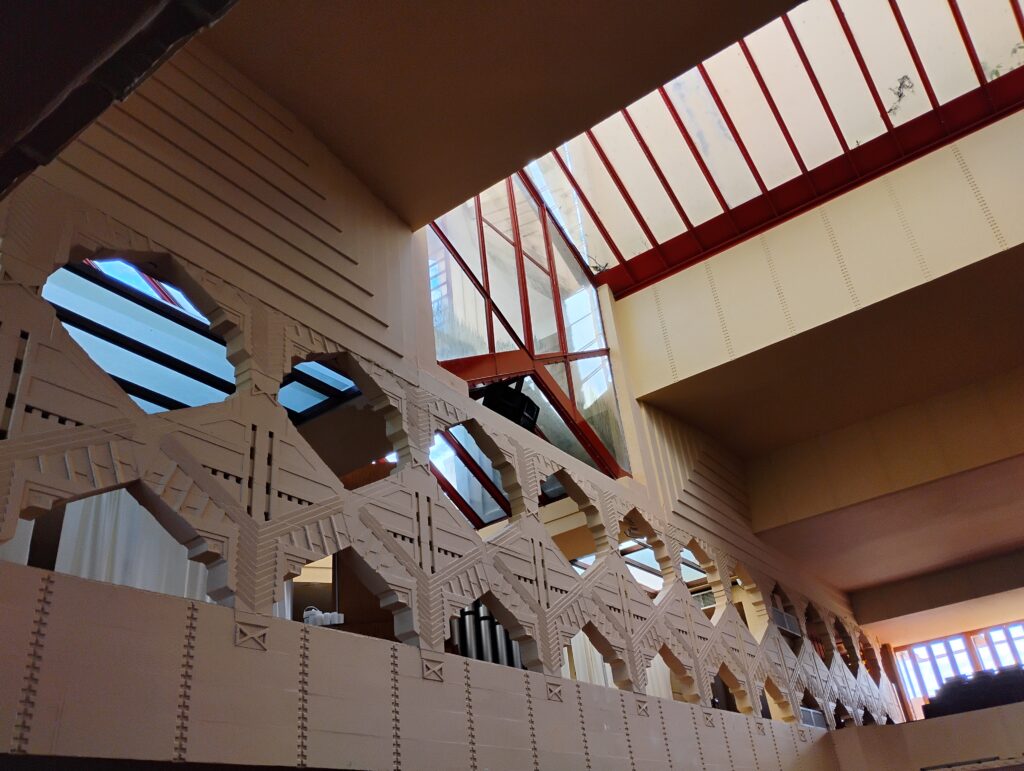
Reflections on Preservation
Because we visited during winter break, the campus was quite empty as most of the students had gone home for the holidays. While this was ideal for photography—we pretty much had the place to ourselves—it did lack that special energy you feel when students are present in a learning environment.
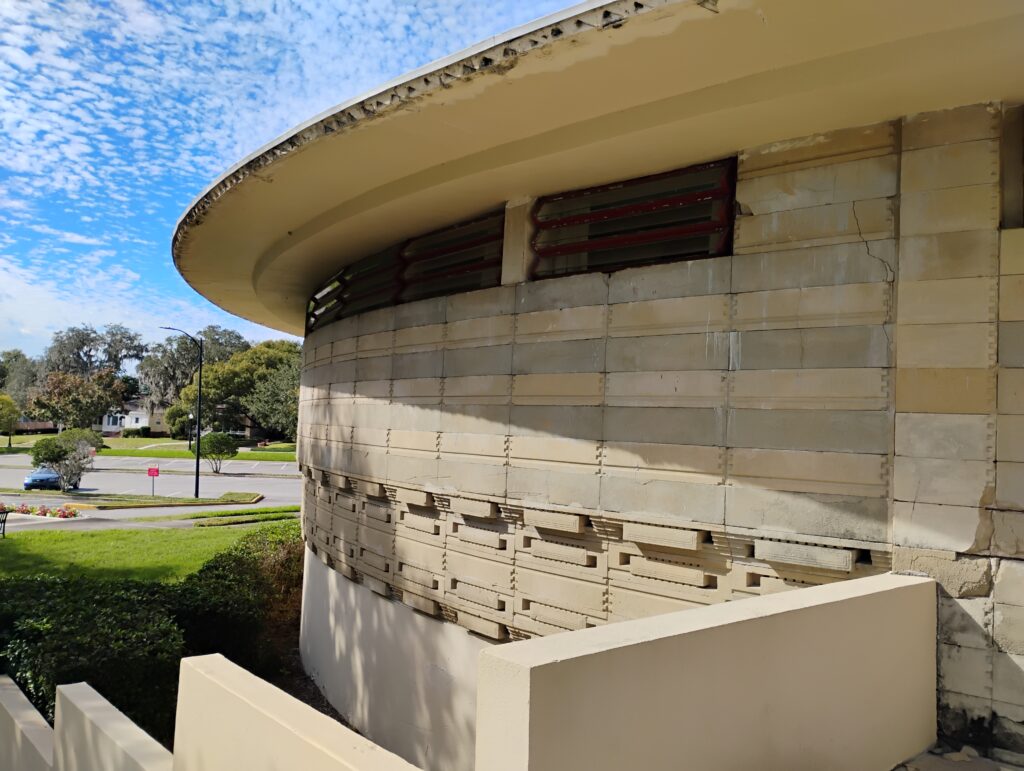
One thing of note is the condition of much of the original concrete. Because of the age of the materials, humidity, salt air, and damaging storms that frequent the region, maintenance on the campus is eternal. We can all be stewards of this architectural legacy and share the burden of its preservation. Hopefully, by writing this article, more people will be aware of the uniqueness of Florida Southern and plan a visit! Perhaps sales of tour tickets and gift shop items will help to subsidize some of the ongoing maintenance and restoration of the campus.
To the Coast: Lakeland to Siesta Key
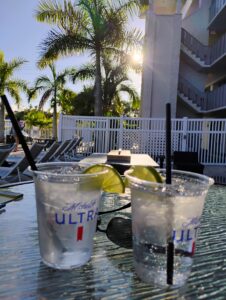
Once our tour had concluded, we spent some time taking more photos and then planned our route to our next destination: Siesta Key. It wouldn’t be a proper trip to Florida if we didn’t take some time to dip our toes in the ocean and see some of our favorite wildlife and “snowbirds!”
View our more-in-depth page about Florida Southern College for additional information and photos.
Again, traffic was a factor. An 86-mile trip took just over three hours! We arrived at our hotel hungry and thirsty, but that was quickly remedied. We settled in and enjoyed a little time poolside. It was still chilly, and we weren’t in shorts yet!
Restaurants within Walking Distance
-
- Gecko’s
- Carrabba’s Italian Grill
- Captain Kurt’s
The next day, we were meeting family members on Siesta Key for the Mimosa and Dolphins Tour with Siesta Key Watersports. The day turned out to be warmer and sunny—a beautiful day for sightseeing on the water.
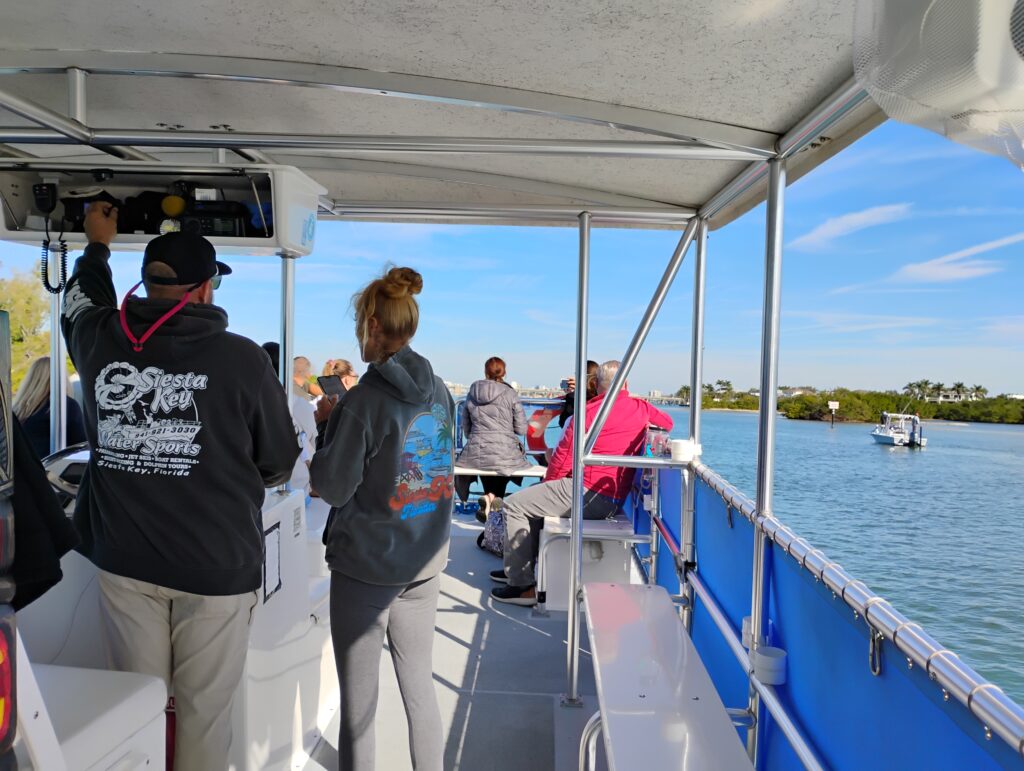
The Intracoastal waters near Siesta were teeming with life. We saw manatees and plenty of dolphins playing in the wake. The birdlife was equally impressive, with great blue herons stalking the shallows, brown pelicans diving for fish, and egrets perched along the mangroves. The crew did an excellent job of navigating us to the wildlife, keeping us well-hydrated, and offering tidbits of information over the speakers along the way.
Having just visited Atherton, California, and then viewing Florida Southern, the homes along these waterways were really something! It seemed to be a competition for the largest, most unique waterfront mansion. Our captain pointed out several homes that were, or had been, owned by celebrities like Tom Cruise, the founder of Swatch, and a member of CCR and AC/DC.
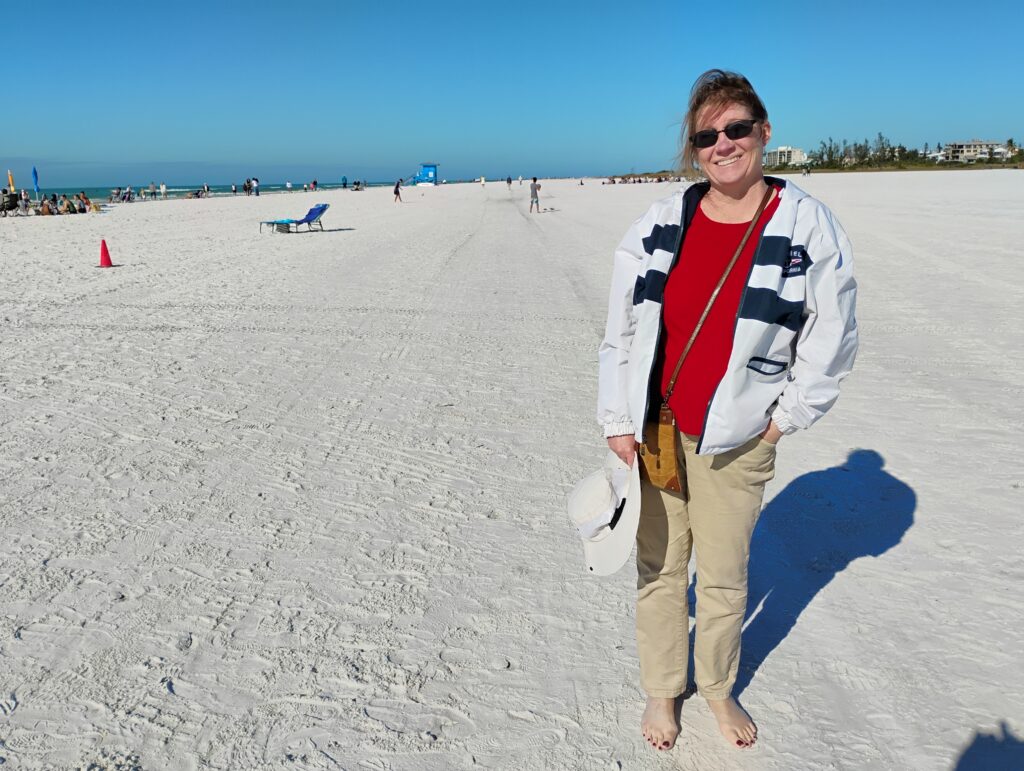
We spent a few more days in Siesta Key, but when it was time to depart, we played it safe. We left for the airport a day early to avoid any traffic surprises and spent the night at the Alba Hotel, which offered a convenient shuttle to the terminals. We had learned our lesson with Florida traffic, and with heavy morning fog forecast, the extra time was a relief. Everything worked out smoothly, and before we knew it, we were back on a flight headed to MSP, already discussing which Frank Lloyd Wright site we might want to visit next!
I would like to extend a sincere thank you to our wonderful tour guide, Victoria King, and the entire staff at the Sharp Family Tourism and Education Center for hosting us and providing such an insightful look into this architectural treasure.