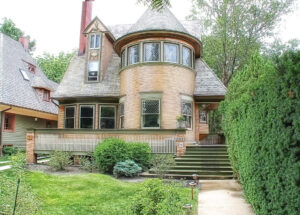
The year 1893 was a collision of profound contradictions for both the United States and Frank Lloyd Wright. While the nation looked backward to European classical traditions for its identity, a 26-year-old Wright stepped away from his mentors to forge a radically independent, uniquely American architectural future.
The Triumph and Terror of the World’s Fair
In May, Chicago opened the World’s Columbian Exposition, drawing over 27 million visitors to a temporary metropolis of monumental structures styled after ancient Roman and Greek classicism. Dubbed the “White City,” its neoclassical grandeur was celebrated by the architectural elite as proof of American sophistication.
However, beneath the grand illusions of the fairgrounds lay a darker, more complex reality. This dramatic intersection of Gilded Age ambition, architectural triumph, and the sinister underbelly of Chicago during the exposition is famously brought to life in Erik Larson’s bestselling book, The Devil in the White City.
A Nation in Financial Crisis
Just days after the World’s Fair opened, the Panic of 1893 struck. The stock market crashed, triggering a devastating multi-year economic depression. Banks closed, railroads collapsed, and unemployment soared. Against this backdrop of deep financial anxiety, the glittering illusions of the fair offered a surreal escape from reality.
Breaking Away from Sullivan
While his contemporaries were busy building temporary Roman temples out of plaster in Jackson Park, Frank Lloyd Wright was staging his own quiet rebellion just a few miles away.
At the start of 1893, Wright was a draftsman at the prestigious firm of Adler & Sullivan. After Louis Sullivan discovered that Wright had been secretly designing “bootleg houses” on the side to support his family, their close relationship fractured. Wright left the firm—or was fired—and boldly struck out entirely on his own.
Founding an Independent Future
At just 26 years old, Wright rented office space in Chicago’s Schiller Building and opened his independent practice. He immediately rejected the neoclassical trends dominating the World’s Fair, viewing the obsession with European columns as a cheap imitation of the past. Instead, Wright spent 1893 laying the foundation for a completely new architectural language—one that embraced low horizontal lines, wide overhanging roofs, and natural materials that honored the flat Midwestern prairie landscape.